
 Kimberly Cochran ’08 was sitting in a board meeting this past spring when she got a call from her former Denison women’s soccer coach.
Coach Gail Murphy was sharing news that Cochran had been selected for the 2026 Varsity D Association Athletics Hall of Fame (HOF) and will be inducted during Big Red Weekend, Denison’s homecoming on The Hill, Nov. 6-8. Cochran is now the sixth member of Denison’s 2005 women’s soccer team to earn the honor, further cementing the team’s place as one of the most decorated in Denison HOF history.
For Cochran, even being considered among Denison’s most accomplished athletes came as a surprise.
“You don’t really think about creating a legacy or that you’ll be remembered in that moment, because for you, it’s just what you did for your team,” Cochran said.
In 2005, that meant giving her all to a team that went 16-4-4, won the NCAC regular-season championship, and made a historic run to the NCAA Division III Elite Eight, the first appearance in the national quarterfinals in program history. Cochran left Denison as the 2006 NCAC Defensive Player of the Year (three-time, first-team NCAC selection) and a member of the NCAC 30th Anniversary All-Decade Team.
Twenty years later, six players from the roster have now earned a place in the Varsity D HOF: Colleen Wirtz ’06, Anne Young ’07, Tammy Hoch ’07, Liz Gillette ’08, Sarah Ash ’09, and Kim Cochran ’08. But those individual honors only tell part of the story of what made that team special.
“It really takes a village,” Murphy said. “There are so many other players whose names aren’t going to be in a record book, but they were just as important and made an impact.”
Murphy remembers a roster so deep that players coming off the bench could have been stars elsewhere. The team was filled with talent, including players who arrived at Denison with experience in high-level club and developmental programs.
Cochran remembers it similarly. There wasn’t just one player an opponent could shut down to stop Denison. Even team practices meant competing against talented players who continually pushed one another.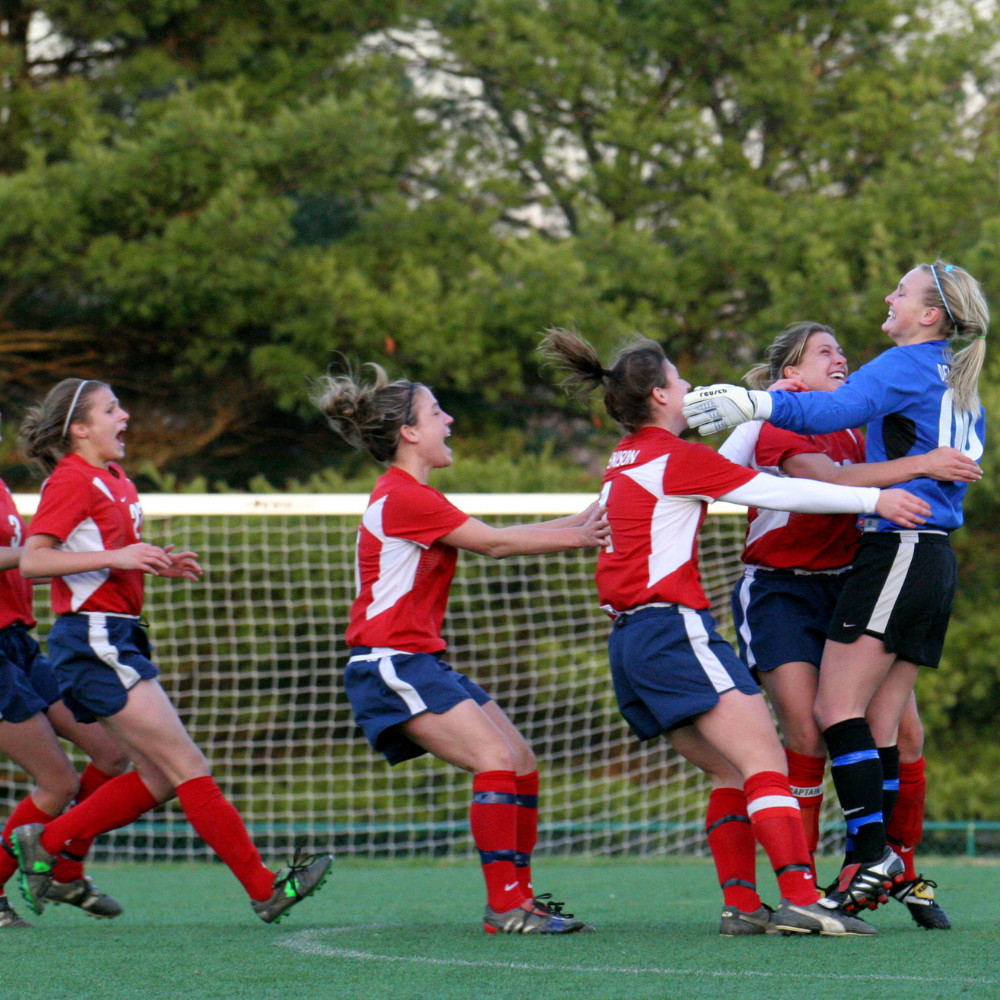
“This team had a lot of superstars, in all parts of the field and with all different styles of play,” Cochran said. “We challenged each other and made each other better.”
A center back, Cochran recalls that goals and assists gave midfielders and forwards obvious statistics to point to, while hers were more likely to be yellow cards.
But Murphy remembers something different. She describes Cochran as tough, competitive, strong-minded, and particularly good in the air.
“It’s really hard to get these accolades as a defender,” Murphy said. “You have to really stand out.”
Murphy describes a collection of strong personalities who were intensely competitive. They were also accomplished students, including scholar-athletes and Presidential Medalists.
The team’s relationships were built in the ordinary moments as much as the big ones: walking to practice, eating lunch together, traveling, sitting in the locker room, and spending time together away from soccer.
“We loved each other on the field. We loved each other off the field, and it was like we were going to do it for each other,” Cochran said.
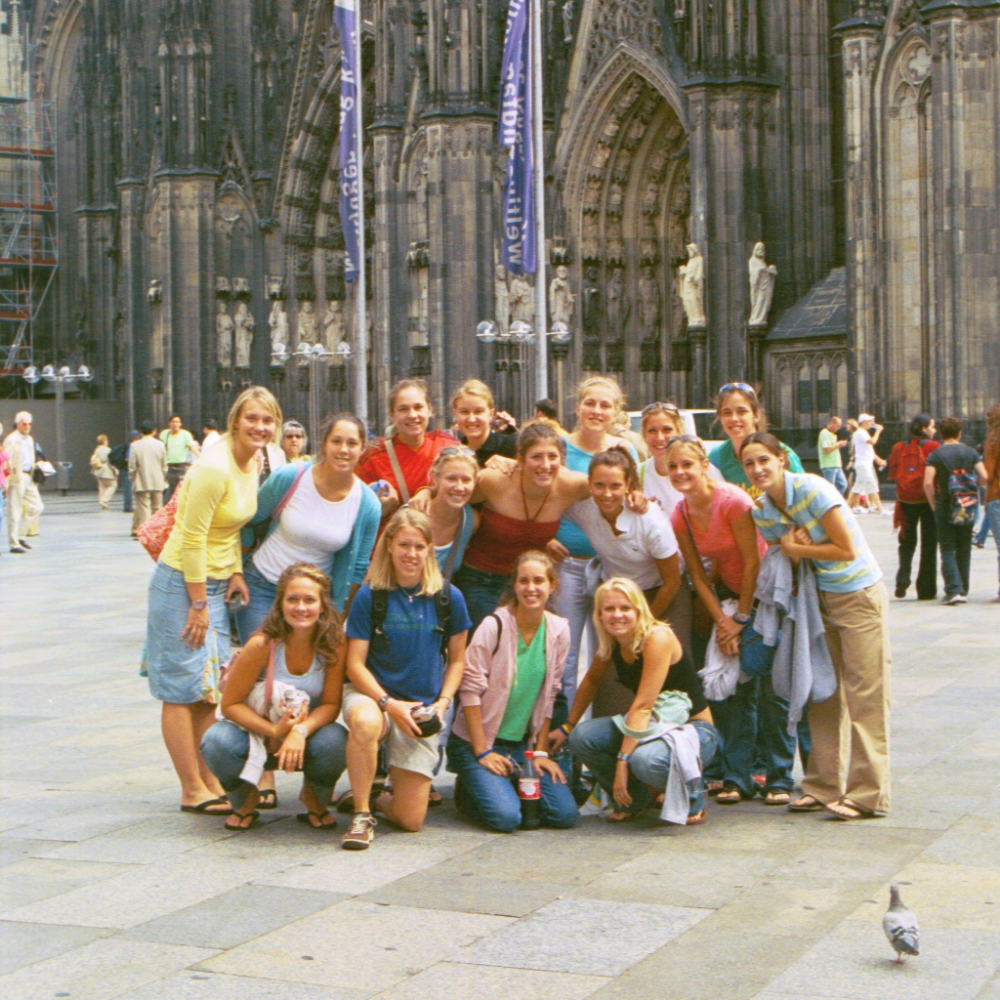 Soccer gave them a common purpose. And being at Denison helped to facilitate these strong, lifelong bonds.
As Denison’s season gained momentum, Cochran remembers the whole campus rallying around the team. The men’s cross country team became some of their most enthusiastic supporters, showing up to games with painted chests and signs to cheer them on.
“We weren’t just playing for ourselves anymore; we were playing for a larger audience that was invested in showing up and supporting us,” Cochran said.
The 2005 team’s influence stretched well beyond its 16 wins and Elite Eight appearance. The players gave future Denison teams something tangible to study.
“I knew back then that we were good,” Murphy said. “But anytime I see clips of that team, it reminds me just how exceptional we were.”
Murphy didn’t stop showing those clips after the players graduated. She compiled footage from the 2005 season onto a DVD and screened it for future Denison teams to demonstrate how she wanted them to play.
After Denison, Cochran joined Teach for America and taught high school Spanish in Charlotte, N.C., before attending the University of South Carolina School of Law. She returned to Charlotte, where she is now an attorney for a large hospital system.
But when Cochran introduces herself, she often finds herself mentioning something that came long before her legal career: “I played soccer at Denison.”
“It’s a really important piece of my identity and a fond part of my journey, who I am, and how I think of myself,” Cochran said.
She remains connected to many of her former teammates. When they get together, they retell many of the same stories they have been sharing for years.
Murphy sees these Hall of Fame inductions as another chance to recognize what that group accomplished together. And yet, the legacy of the 2005 team is bigger than the six names on the wall.
It lives in the teams who studied their film, the friendships that have lasted long after their final game, and the standard they set for the Denison women who would wear the jersey next.