
America celebrated its 250th birthday this July, and Denison’s own 200th anniversary will take place in just five years. As Granville commemorates its history, following a different theme each month, we share a corresponding timeline of significant milestones for our home on The Hill.
January: The birth of Licking County and Granville
 In 1776, the lands that comprise Granville (and Denison) were mostly populated by indigenous peoples with a sprinkling of adventurous white and Black inhabitants. Areas of what is currently Ohio were surveyed by George Washington in the 1750s and early 1770s.
Though there is no record of Washington’s presence in this region, Licking County lands were offered in payment to veterans of the American Revolution. Local cemeteries hold the remains of several Revolutionary soldiers, including Timothy Rose, who built the first cabin in Granville as part of the group of settlers from Granville, Mass., who founded Granville, Ohio, in 1805.
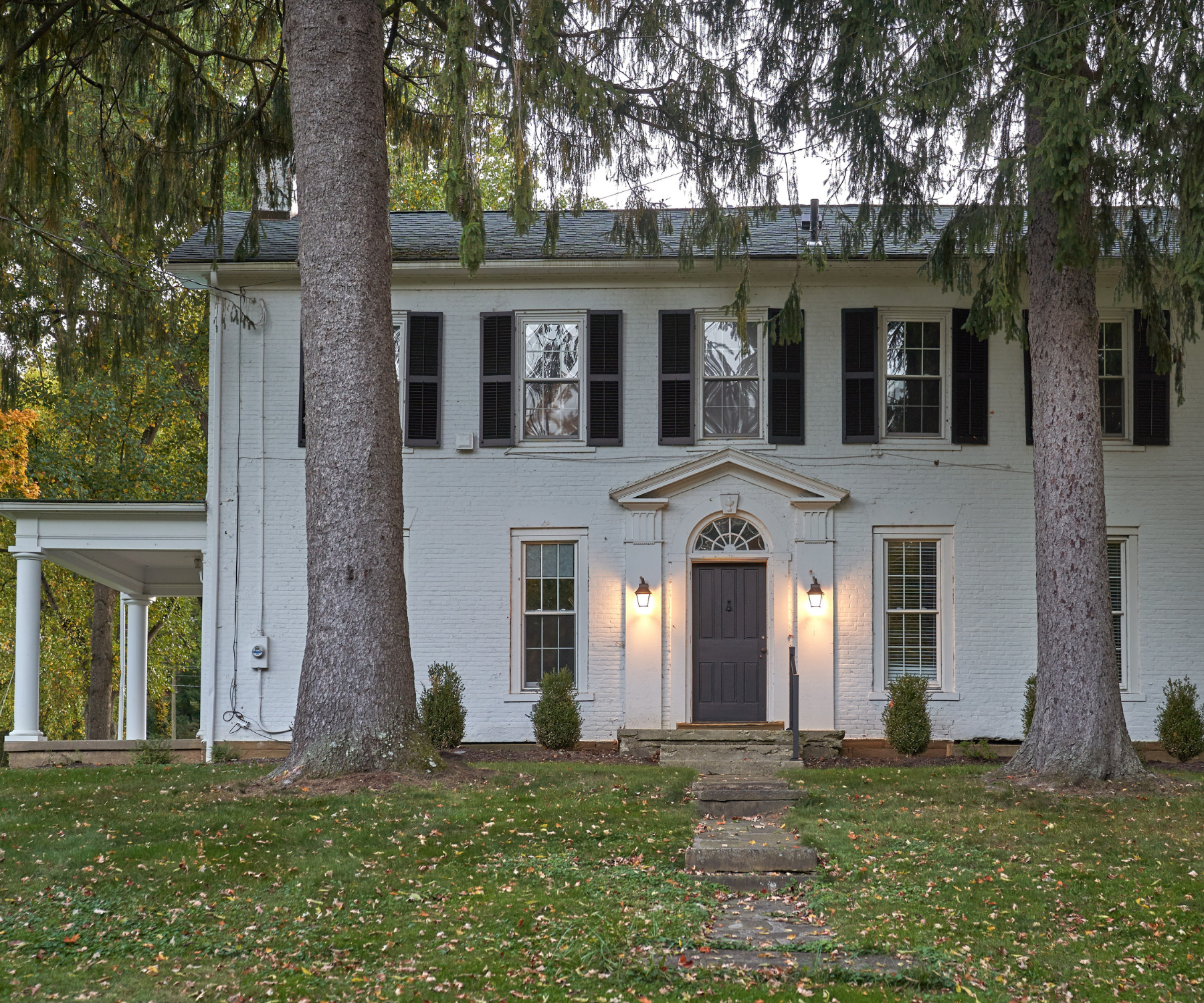
Fun fact: In 1820, Levi Rose (no relation to Timothy), who settled here in 1805 and fought in the War of 1812, built Rose House, the oldest building on Denison’s campus. Today, students live in Rose House, near Denison’s East Gate.
 February: Business
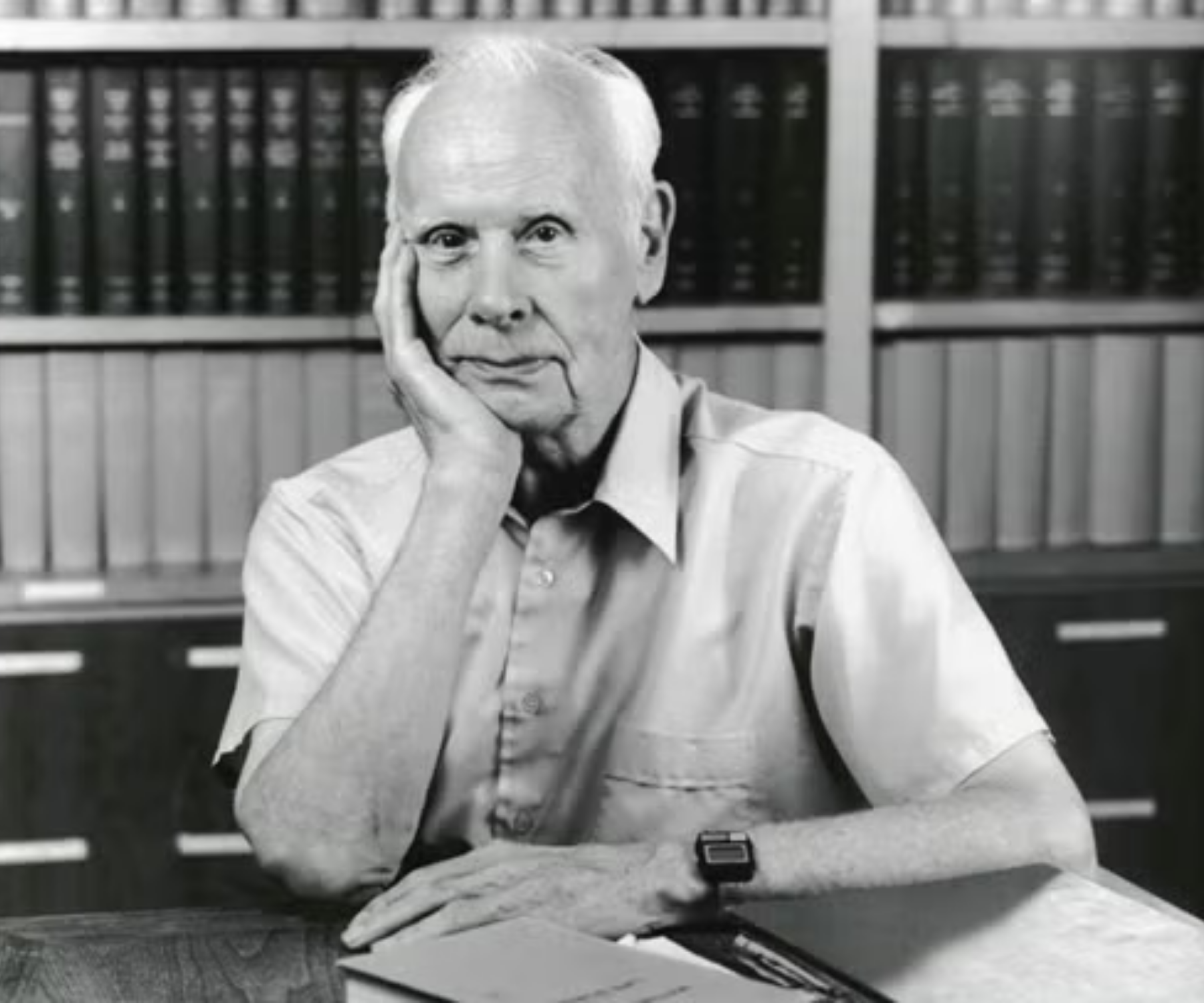
A business and leadership incubator, Denison boasts numerous entrepreneurs and business leaders among its alums. Early innovators include Herbert Dorsey, Class of 1897, who invented the fathometer, which enabled ocean exploration, and George Stibitz, Class of 1926, who is considered the father of modern computing for his invention of an early digital calculator, the Model K, which would become the basis for modern computers.
Former Denison Trustee Games Slayter, for whom Slayter Hall is named, invented fiberglass and held several related patents. He was on the Materials Advisory Board of the U.S. National Research Council and consulted with NASA.
Fun Fact: Denison is now Granville’s largest business and employer, with more than 900 faculty and staff. Two local businesses, The Granville Inn and Denison Golf Club, are owned by Denison and were built in 1924 by John Sutphin Jones. Sometimes known as Granville’s tycoon, Jones’ wealth came from railroads and coal mines.
March: Entertainment
From dramatic monologues of the 1800s to poetry slams today, talented Denisonians have amused and thrilled audiences for more than two centuries. Dozens of Denisonians have lit up screens large and small, performed to acclaim on and off Broadway, and served as entertainment executives, artistic directors, and comedians.
These stellar alums include former Warner Media executive and current Denison Trustee James L. Anderson ’85, award-winning actor Steve Carell ’84, former chairman and CEO of The Walt Disney Company Michael Eisner ’64, award-winning actor Jennifer Garner ’94, former executive director of the Dayton Contemporary Dance Company Ro Nita Hawes-Saunders ’78, 13-time Tony award-winning Broadway producer Carl Moellenberg ’74, and actor and comedian Alex Moffat ’04.
Fun fact: From 1947 to 1963, Denison Summer Theatre held plays and concerts in the “Big Blue Tent” on what is now the Arts Quad. The acting company, which boasted 250 members, produced 156 plays for an audience of nearly 300,000. The Big Blue Tent is graphically represented in the Gay Reese Lobby at the Eisner Center for the Performing Arts.
April: Transportation
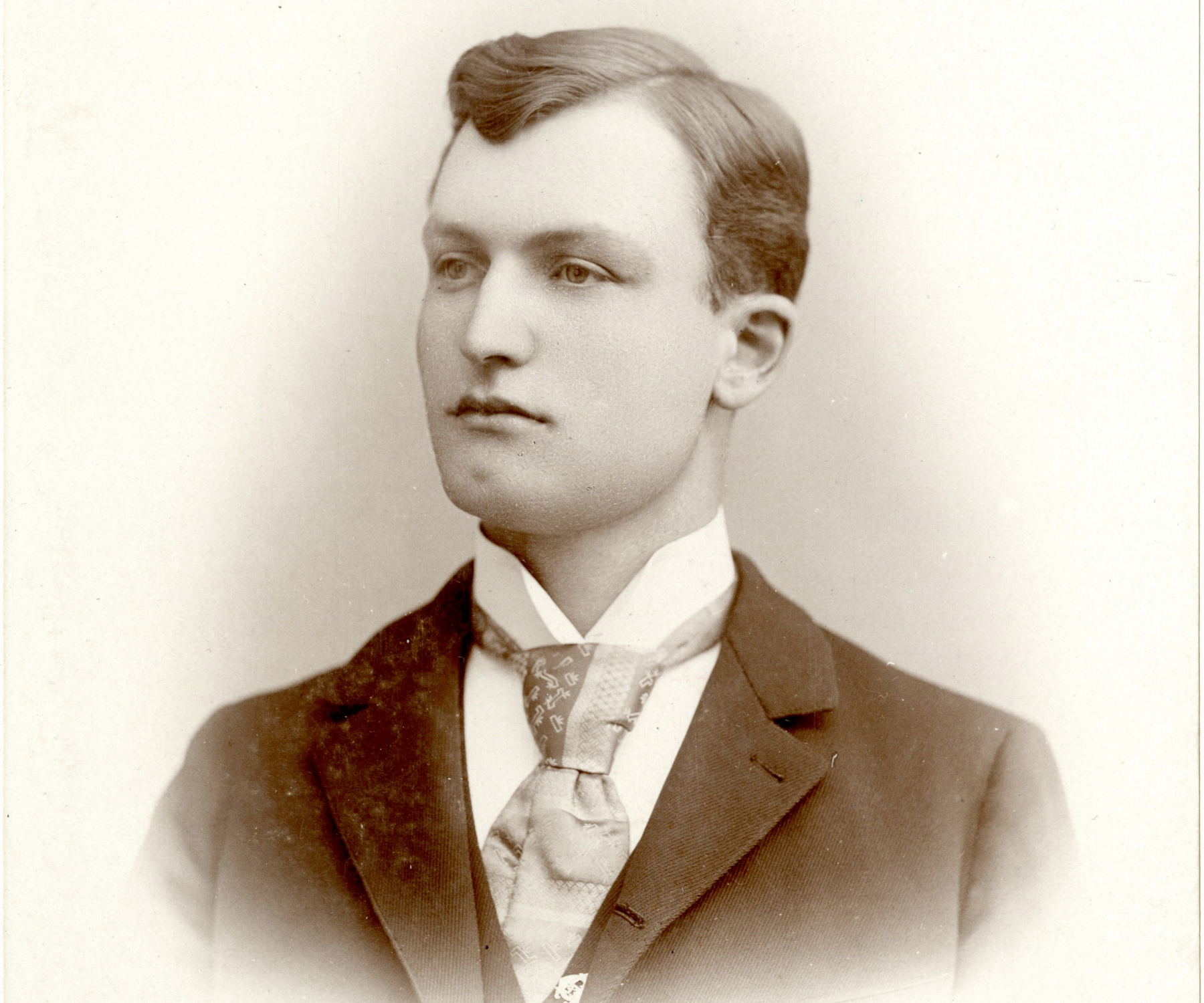 Former Denison Trustee Edward A. Deeds, for whom Deeds Field is named, was an early transportation innovator. Deeds, with Charles F. Kettering, cofounded automotive technology firm Dayton Engineering Laboratories Company (Delco). Deeds also partnered with Orville Wright in an early airplane manufacturing venture and led the military aircraft production effort in World War I.
Deeds grew up on a Granville farm, graduated from Denison in 1897, and went on to become an engineer, inventor, and president of the National Cash Register Company. In 1895, when Denison’s first electric lighting system was installed in a residential hall, frequent breakdowns kept the campus in the dark. Then-student Edward Deeds was hired to keep the lights on. During one outage, he ingeniously connected the system to his family’s threshing machine engine, restoring power.
Fun Fact: In the 1920s, Denison briefly considered installing an aerial tramway to transport patients from the top of The Hill to the top of Mt. Parnassus, a large promontory on the east side of Granville and the proposed location for a new medical center. The cars would have traveled about 2,500 feet, crossing over the village 90 feet in the air.
May: Arts, Culture, and Literature
Arts and literature have been embedded in Denison’s ethos from its earliest days. Ten of the first 37 registered students proclaimed a study in English. Literary societies abounded, including the Euterpean Literary Society at Shepardson College for young women having “literary or musical ability and sustaining good moral character.” Denison Archives holds an olive branch from Delphi, Greece, used in a 1930 ceremony celebrating the bimillennial anniversary of Virgil’s birth.
Denison’s strong literary tradition continues today. The Beck Series brings Pulitzer Prize and National Book Award-winning authors to The Hill, including Billy Collins, Louise Erdrich, Joy Harjo, Viet Thanh Nguyen, Tom Stoppard, Alice Walker, and Eudora Welty. Celebrated Denison authors include James Clear ’08, James Frey ’92, Ann Hagedorn ’71, Pam Houston ’83, Molly O’Neill ’75, Jonathan Reynolds ’65, and Alison Stine ’00.
Fun Fact: Each summer, dozens of talented high school students spend a week at Denison with the Reynolds Young Writers’ Workshop. During the eight-day residential program, they attend creative writing workshops and group sessions with Denison creative writing faculty and notable visiting writers.
 June: Parks and Outdoors
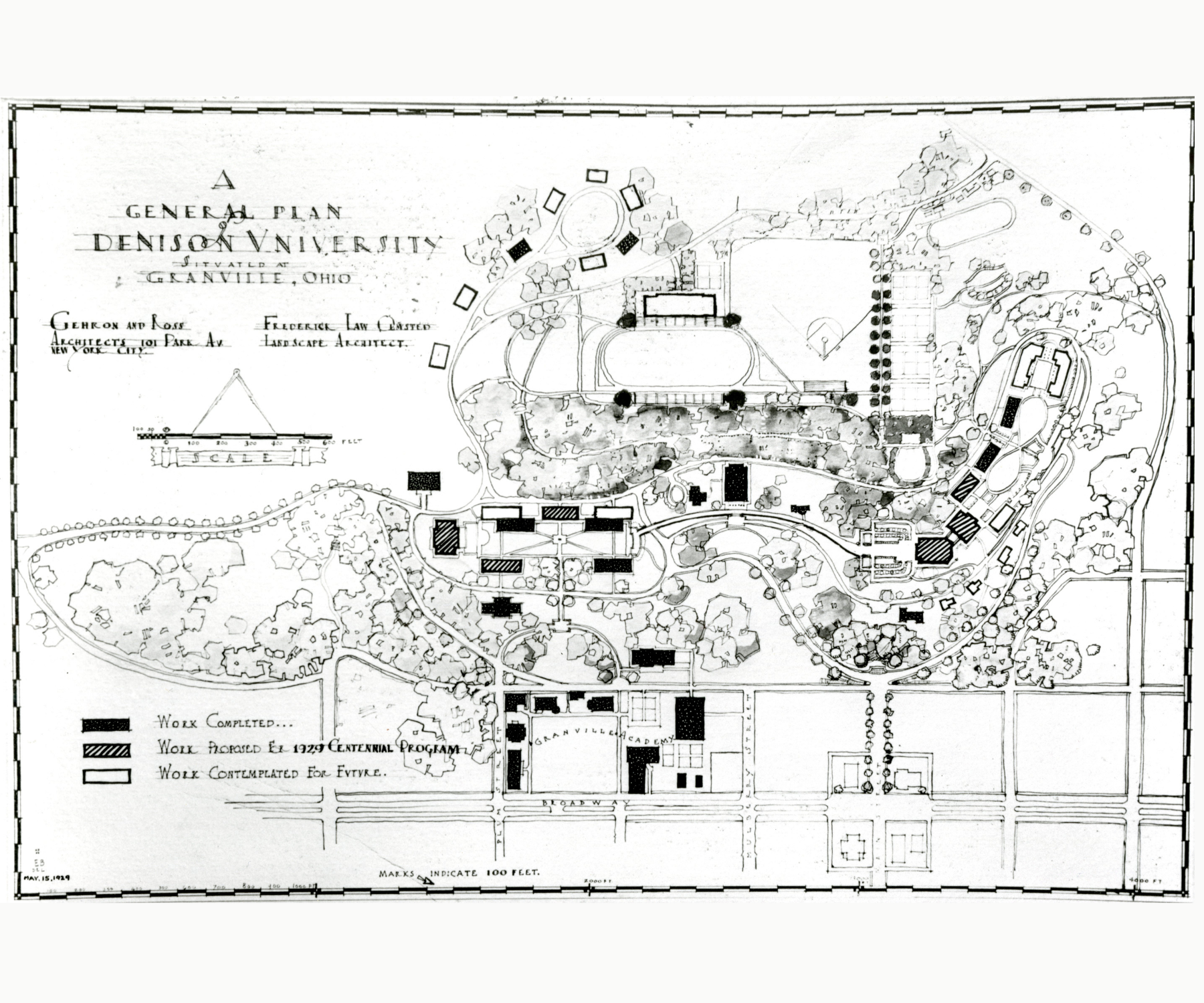
Nature provided Denison with a magnificent canvas and soaring overlooks. The campus master plan, designed in 1918 by the famed Frederick Law Olmsted landscape architectural firm, was so well-conceived the university follows it to this day. Just north of the main campus, Denison’s 350-acre Biological Reserve is a diverse array of forests, ponds, and meadows, crisscrossed with trails for the community to enjoy.
Denison has won numerous awards for the beauty of its campus. In recent years, the National Association for Olmsted Parks awarded Denison second place, tied with the National Mall in Washington, D.C., for the national award. Most recently, U.S. News & World Report noted Denison is one of America’s most beautiful campuses.
Fun Fact: Designated a Tree Campus USA, The Hill is a certified arboretum that highlights campus specimens for education and enjoyment. Campus visitors can spot a northern red oak on the north side of Higley Hall, a saucer magnolia between Reese House and Swasey Chapel, and a Chinese chestnut next to the Hoaglin Wellness Center.
July: July 4th Holiday and Parades
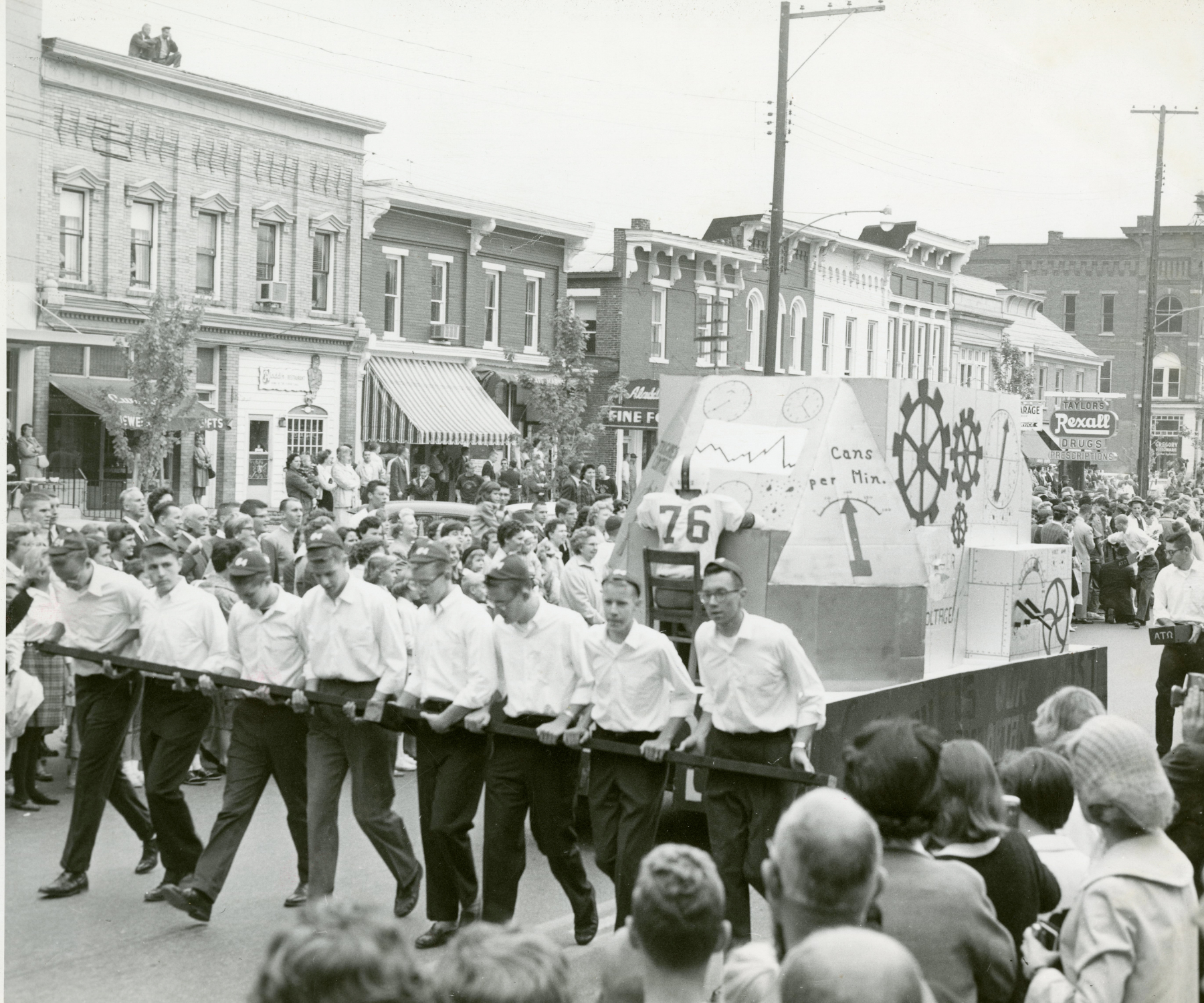
 Denison has hosted countless celebrations over the years. Many have been traditional, such as Commencement, while others have been a bit more whimsical. The 1860s saw freshmen leading a march to Mt. Parnassus for an annual “burying of Livy,” which referred to entombing textbooks featuring the Roman historian’s work, not Livy himself, and a “Washington’s Banquet,” around President’s Day.
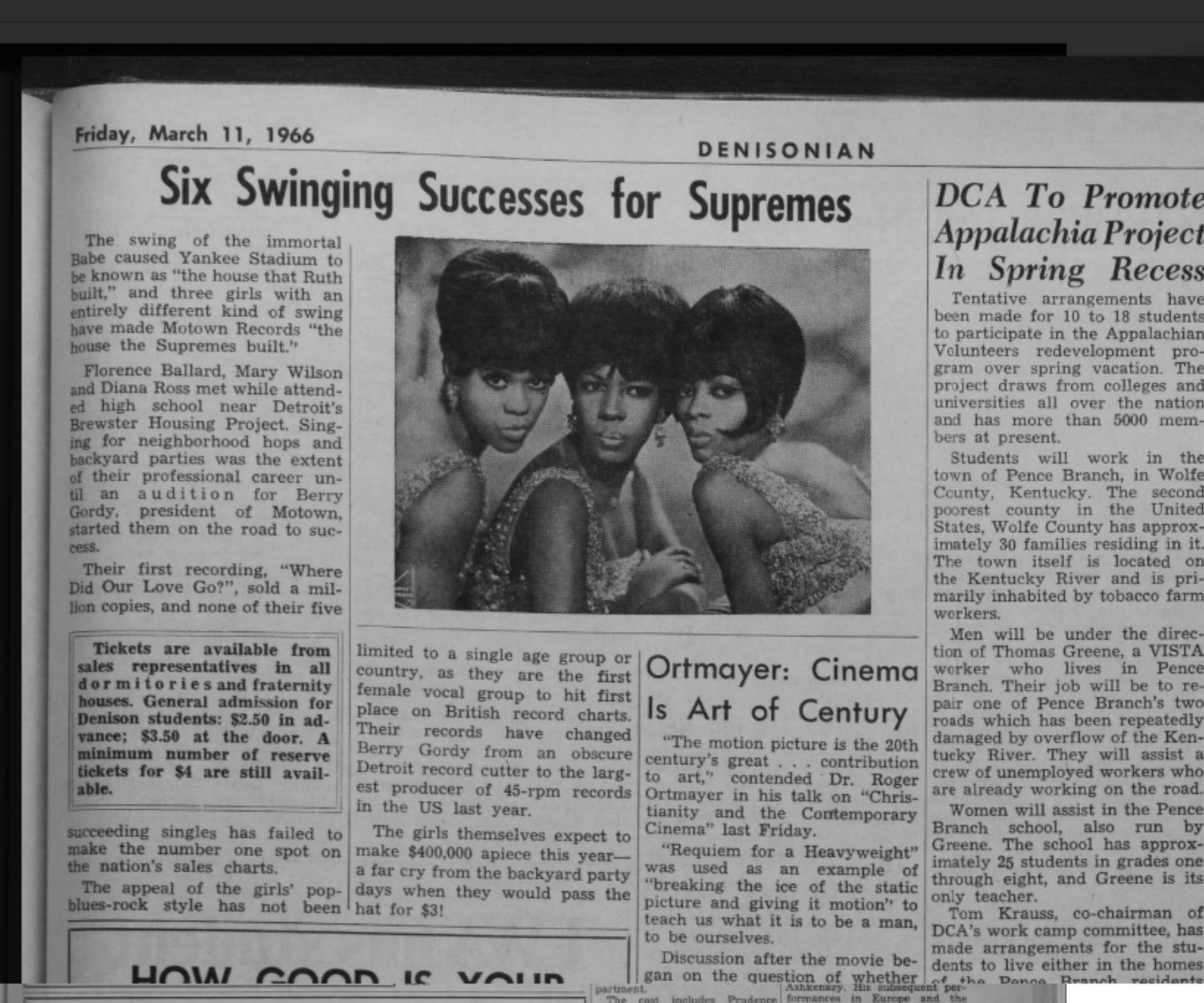
Later celebrations included Mother’s Day, which culminated in crowning a May Queen, and Denison Day. During D-Day, as it’s known, Denison students rock out to concerts with the premier music artists of the day — from Diana Ross and the Supremes to Dave Matthews, Ben Folds, and Mos Def.
Fun Fact: Some of Denison’s earliest Commencement ceremonies were held in July and August, before they shifted to May in the 1870s. After years of weather-related discomfort and delays, today’s ceremonies are comfortably held in the Mitchell Center.
 August: Great Granville Picnic
This year’s Great Granville Picnic will take place along West Broadway, abutting the south edge of Denison’s Arts Quad. With velvety green lawns beneath spreading oak and maple trees, the Arts Quad is an irresistible place for outdoor gatherings of students and the larger community.
Denison hosts the annual Strawberries on the Lawn event on the Arts Quad each year in August. After a convocation in the Eisner Center introducing new faculty members to the community, faculty pour onto the adjacent lawn to meet new colleagues and catch up with old friends.
Fun Fact: Denison’s first Homecoming celebration was held in the fall of 1915, with a jaw-dropping (66-0) win over the University of Akron. Today, Denison hosts two large fall events: Big Red Weekend (Nov. 6-8, 2026) for alums and their families, and Family Weekend (Sept. 25-27, 2026) for current students and families. Early June’s annual Reunion (June 10-13, 2027) brings more than 1,000 Denisonians back to The Hill each year.
September: Athletics
 The Big Red is a winning tradition that routinely leads its closest Division III competitors. Last year, Denison snagged its sixth consecutive and conference-leading 21st North Coast Athletic Conference All-Sports Trophy.
With 26 varsity teams (women’s water polo will be the 27th in fall 2026) and 192 NCAC championships, the Big Red dominates on the field. Denison’s student-athletes are equally successful in the classroom, with 130 Academic All-Americans and 58 NCAA Postgraduate Scholarship awardees.
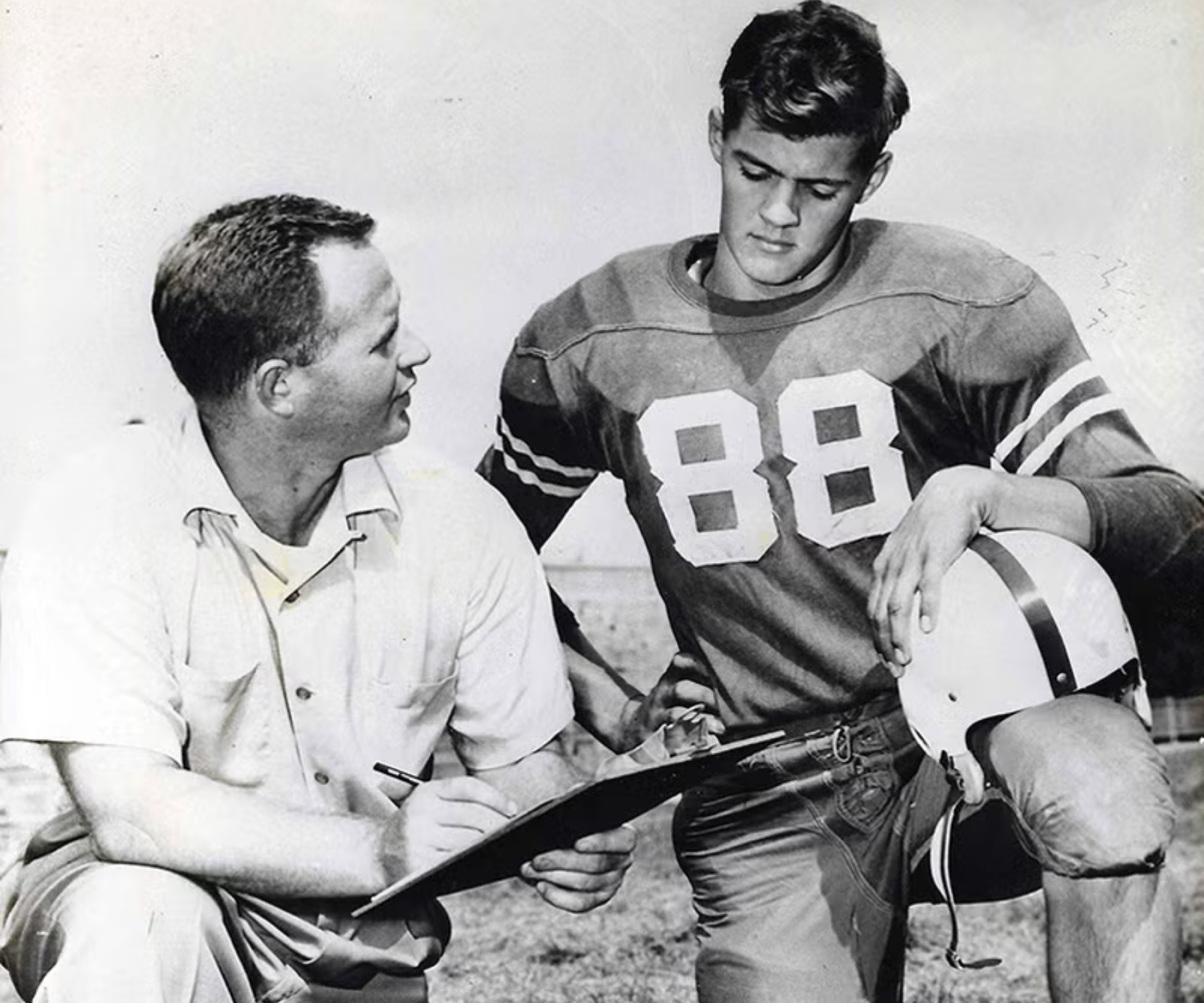
Fun Fact: Men’s and women’s athletic competition is part of Denison’s DNA. As early as the 1870s, The Denisonian mentions men’s baseball and football teams, and the first recorded intercollegiate event was a baseball game against Kenyon College in 1871, which Denison won 59-34. In 1900, Denison boasted a women’s basketball team, and women participated in a field day with track-and-field events like the shot put, high jump, running, and baseball and basketball throwing.
 October: Food, Farms, Harvest
In 1831, Denison first took root at a 200-acre property, Middleton Farm, just outside Granville on Route 16. Then named the Granville Literary and Theological Institution, students were required to spend part of their day in manual labor to support the farm and buildings. They earned a small wage for their work, which helped offset their tuition, room, and board.
In 1844, that practice halted and by 1856 the then-Granville College acquired a new name and location: Denison University, atop The Hill in Granville.
Fun Fact: The Snagel, a toasted bagel topped with smooth cream cheese and a healthy sprinkle of brown sugar, has been the perfect late night study break treat at the Bandersnatch coffee house for decades of Denisonians.
 November: Veterans
Denison played a key role in World War II, hosting the Navy and Marine Corps V-12 College Training Program from 1943 until October 1945. Denison educated 1,284 service members, and 248 of them trained at Denison’s Pre-Meteorological Training Center for the Army Air Force Technical Training Program, including William Rehnquist, 16th chief justice of the United States.
Also during World War II, Denison became one of five repositories for documents from the Library of Congress. Doane Library held 1,200 cases of materials under a 24-hour guard. According to The Denisonian, the collection at Doane, called the “60 Cubic Feet,” was considered the second most valuable of the transported documents.
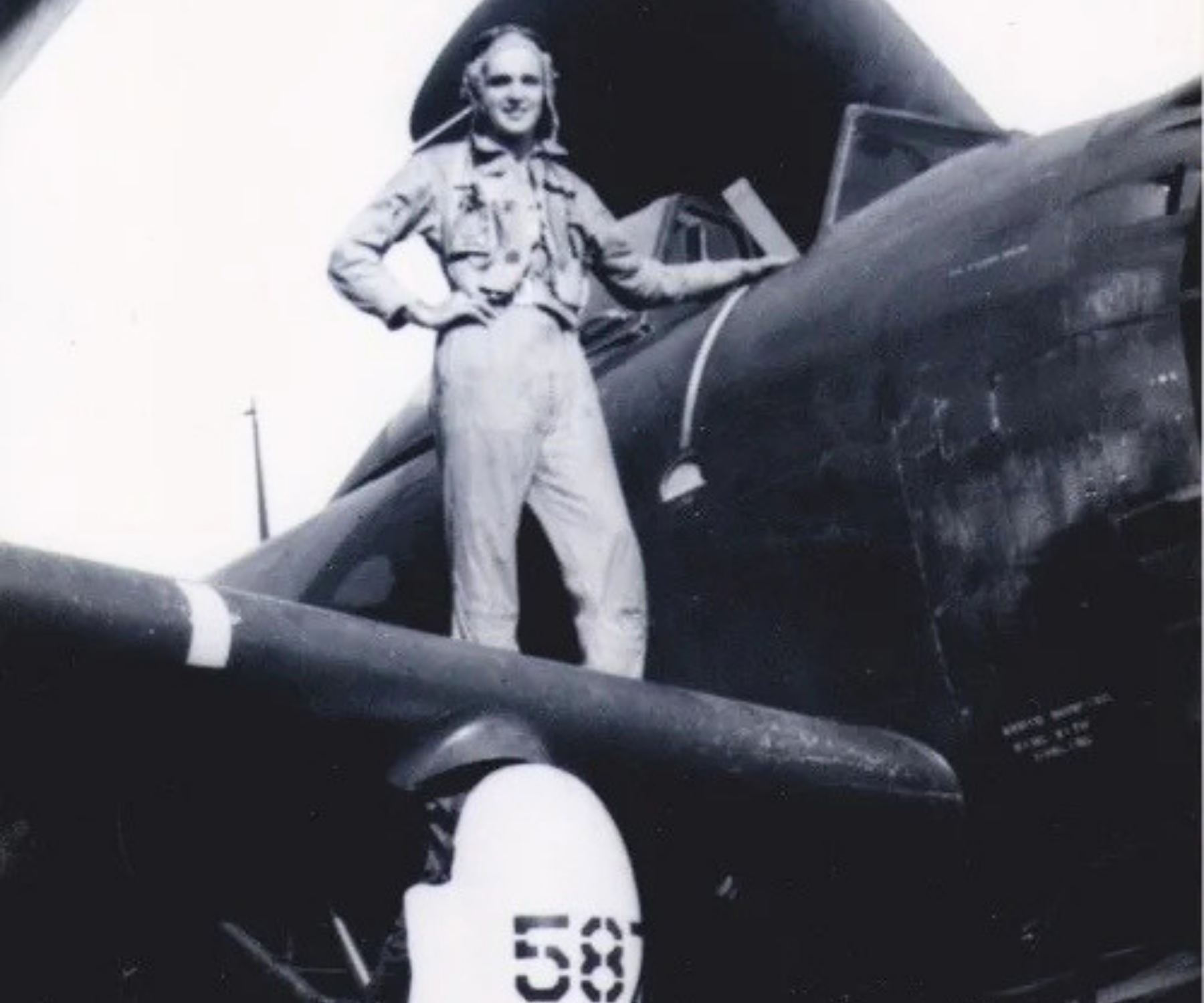
Fun Fact: On Nov. 10, 2026, Denison will host a symphony tribute honoring Navy pilot and Denison Emeritus Physics Professor Captain Trevor “Trig” Gamble, who died in 2023. Denison Professor Ching-chu Hu composed the tribute for the concert.
December: Looking to the Future
This fall, the doors will open to Denison’s newest academic center: Knobel Hall and the King Center for Data & Innovation. To ensure every student graduates with AI fluency and digital literacy, the new center will infuse real-world problem-solving across the curriculum.
Students will study data from every angle, engaging their intellectual curiosity to use technology thoughtfully in an ever-evolving world, making them more competitive for top internships and jobs.
Fun Fact: Denison’s most ambitious fundraising effort in history, What We Can Be: The Denison Campaign, is a call to imagine and invest in the next great chapter of Denison’s story. The campaign is raising $400 million to advance the university’s focus on launching students quickly and successfully into their lives and careers.